




Zero‑day exploits on underground resources in 2026
Cyber threat intelligence from underground resources
Private forums, underground channels, and marketplaces act as hubs where adversaries can find attack tools and information, buy and sell stolen data and access to corporate networks, rent out malware, and trade vulnerability exploits.
Monitoring these resources helps organizations detect data leaks affecting them, track new malware families and updates to existing ones, and identify products that threat actors are researching for vulnerabilities or targeting with zero‑day exploits offered for sale. The latter deserve particular attention. Zero days are used in the wild less often than exploits for known vulnerabilities, but they are more difficult to defend against. When offered for sale, the vulnerabilities they target typically have neither a patch nor a public description. Organizations cannot address these flaws through a software update, and the vendor may not even be aware of the issue.
An underground listing is often the only early source of intelligence about such threats. It may reveal which products or software categories are affected, what conditions must be met, and how the vulnerability can be exploited. This information helps organizations assess their own infrastructure, mitigate risks before a patch is released, and identify where to look for indicators of compromise.
From January through October 2026, BI.ZONE Threat Intelligence uncovered multiple posts offering zero‑day exploits for sale. In this article, we examine which vulnerability types and software attract adversaries, what insights such ads can provide, and how organizations can put the findings into practice.
Target vendors and platforms
Microsoft
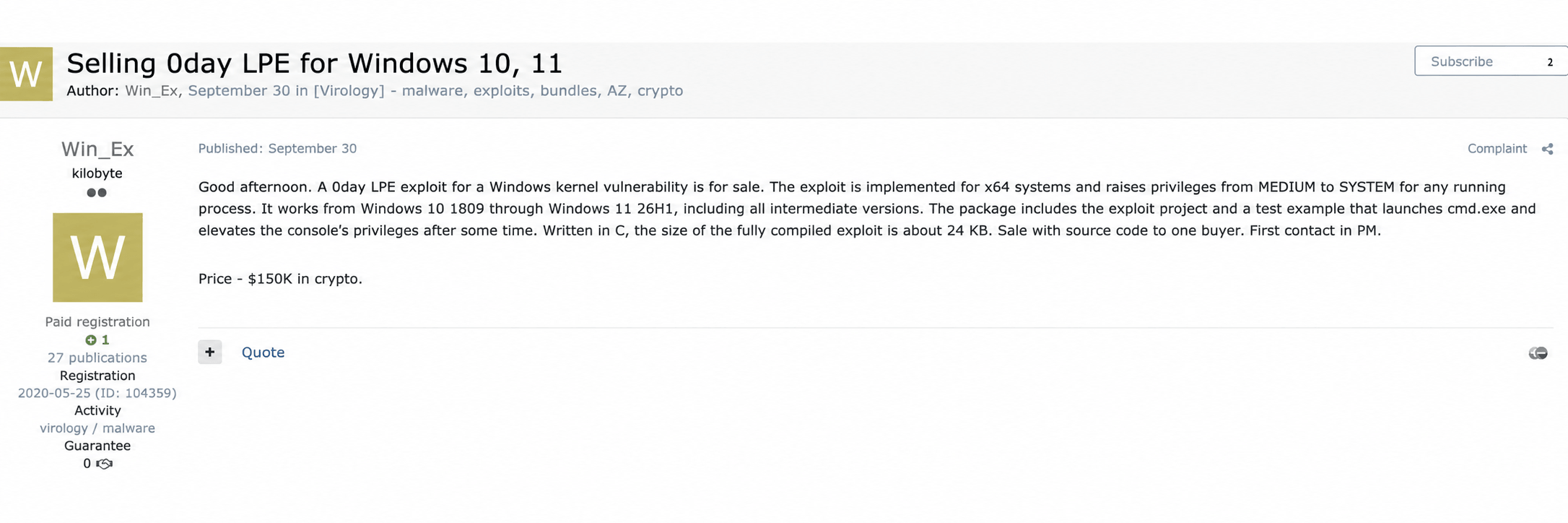
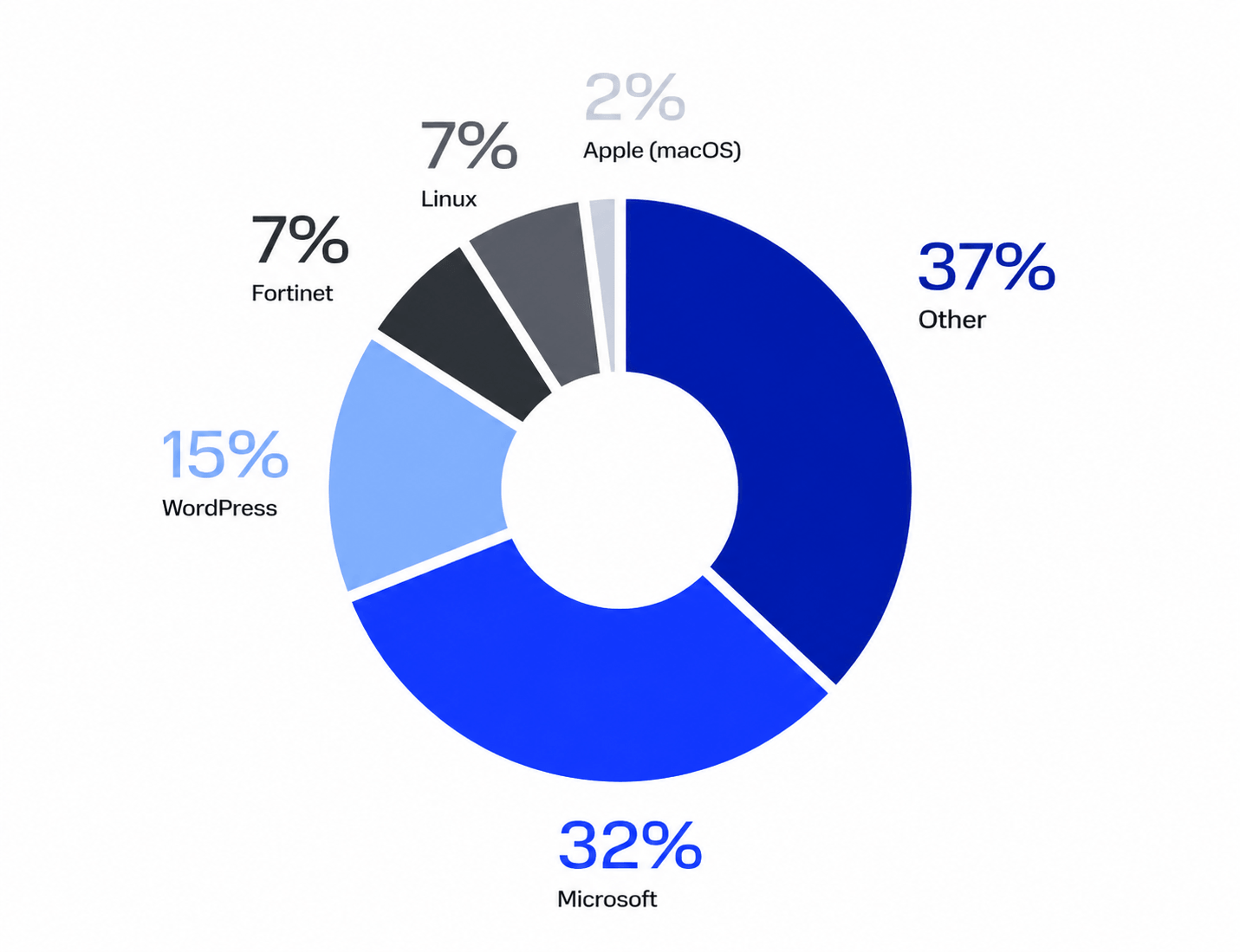
Microsoft products accounted for the largest share of listings (32%). Adversaries offered exploits targeting the Windows kernel and other components, Microsoft Office, Outlook, Microsoft Defender, and remote access services such as RDP and RD Web.
WordPress
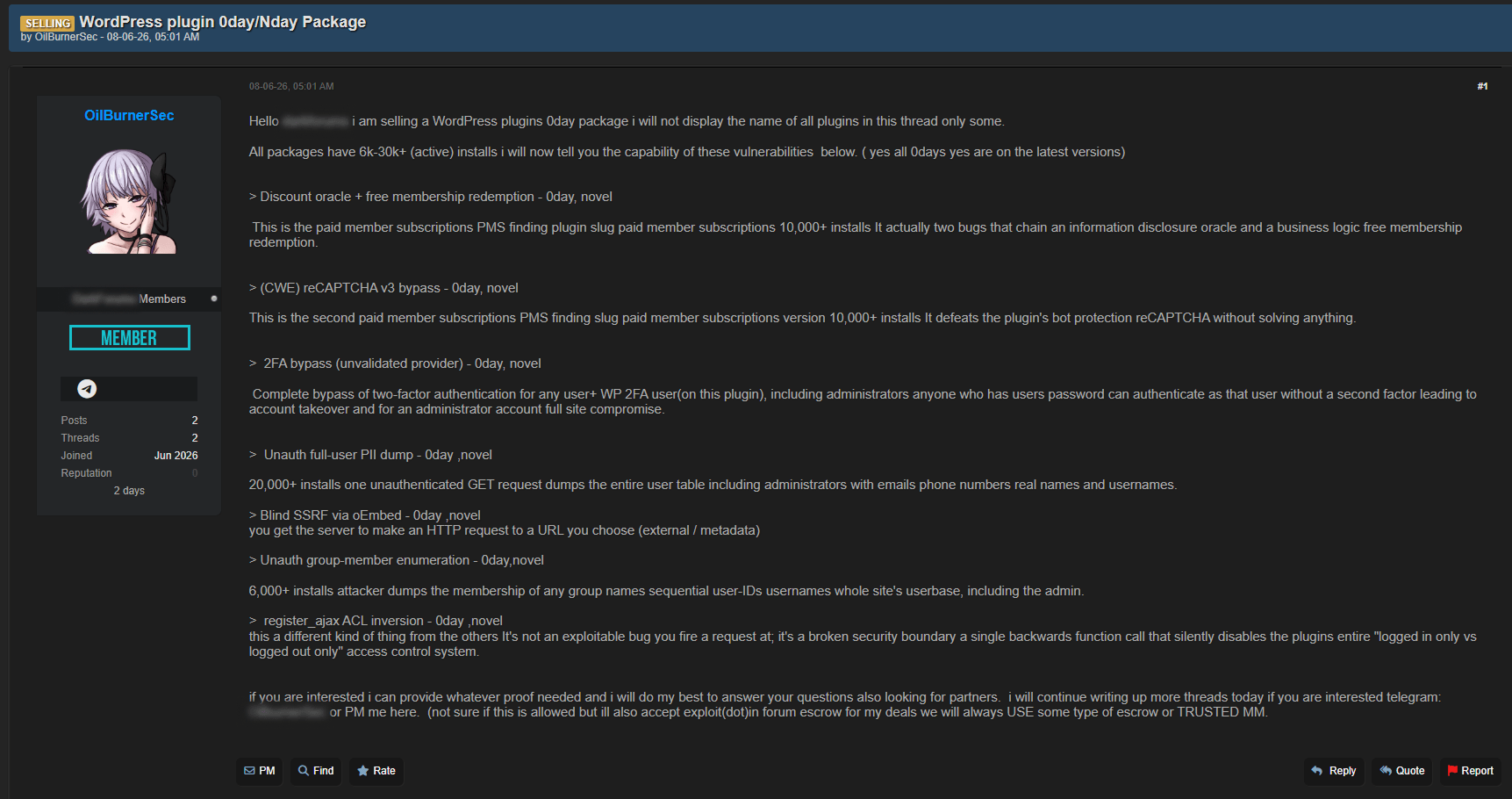
НWordPress ranked second, appearing in 15% of listings. Most concerned third‑party plug‑ins, with only one targeting the WordPress core. One ad offered exploits for five vulnerabilities in the LiteSpeed Cache plug‑in, while another advertised seven vulnerabilities across several plug‑ins used for subscription and authentication management.
Fortinet and other vendors
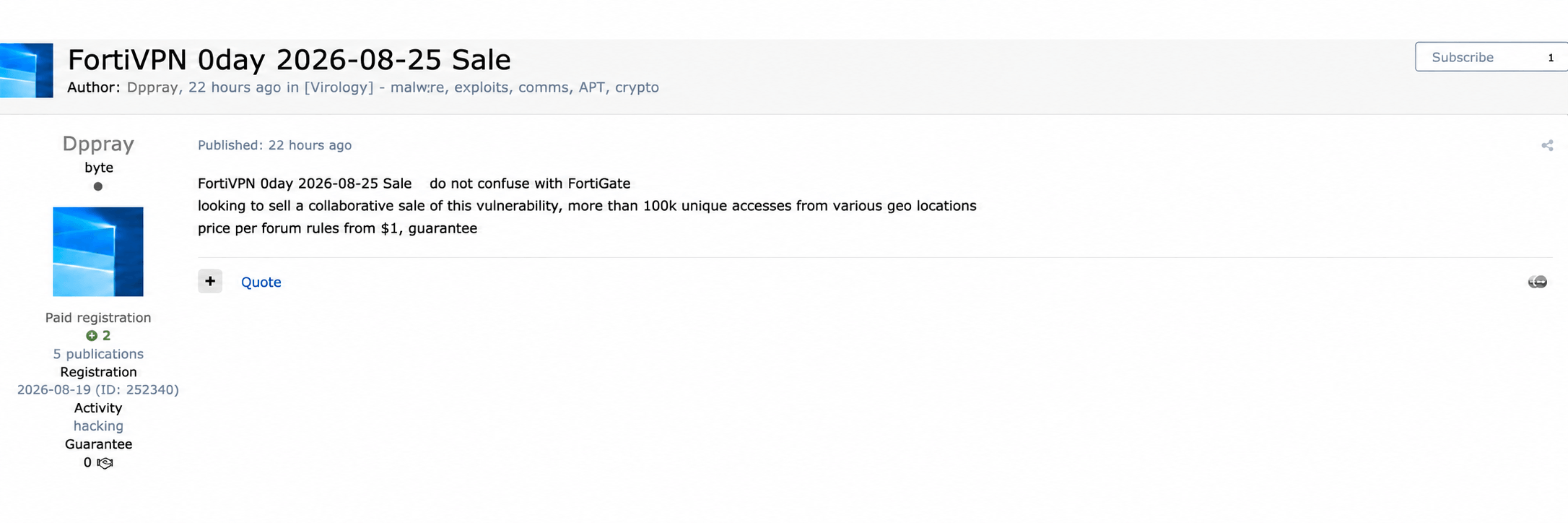
Fortinet ranked third (7%), with recorded listings offering exploits for FortiClient VPN, the FortiGate firewall, and the FortiManager centralized management platform.
Linux appeared in 7% of the ads, Google services in 5%, and Apple (macOS) in 2%. The remaining 37% consisted of one‑off mentions of the following vendors and products: Adobe, MariaDB, myBB, Roundcube, Kerio Connect, Asterisk‑based IP telephony software, TerraMaster NAS systems, Castles payment terminals, Discord, Ledger, WinRAR, FreeBSD, and an unidentified vendor of remote desktop software.
Marketed vulnerabilities
RCE
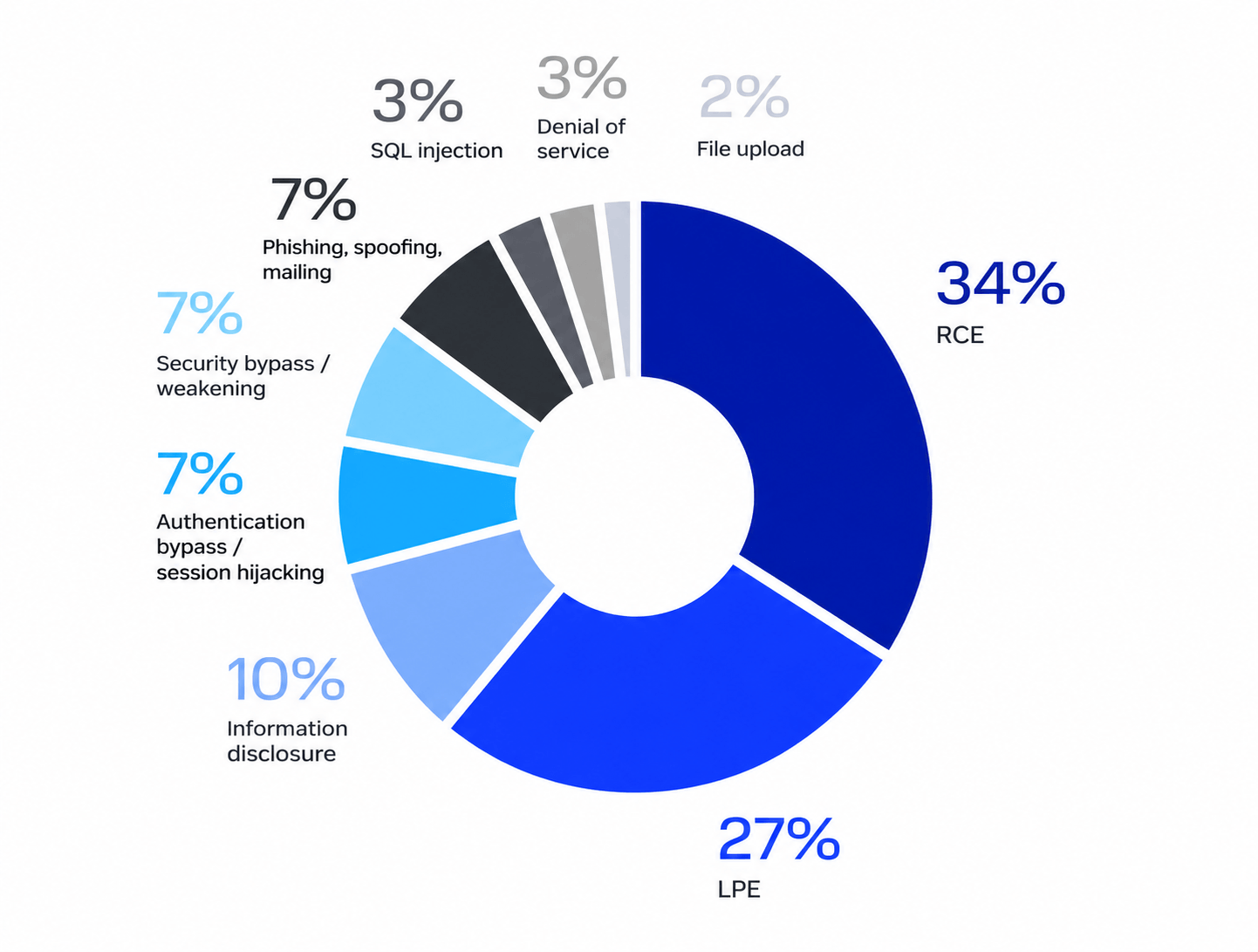
The largest share of ads (34%) offered RCE exploits that allow attackers to remotely execute code on target systems. This may involve an internet‑facing network service or a specially crafted file being opened in a vulnerable application. RCE exploits can therefore be used to gain initial access.
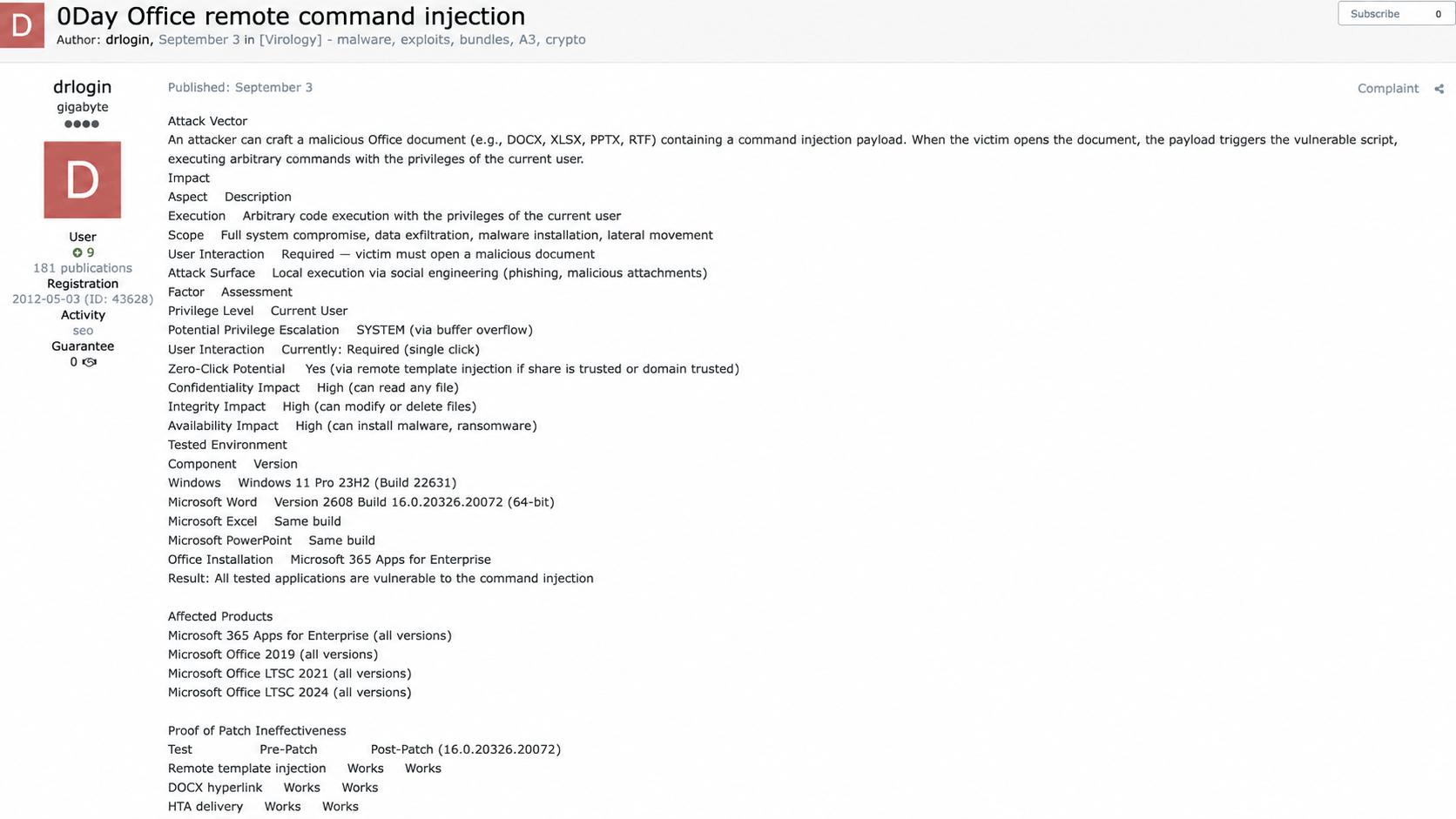
For instance, the ad below offers a Microsoft Office exploit. According to the seller, the code is triggered when a crafted document is opened and executes commands with the current user’s privileges. The seller also claims that the exploit supports multiple Office document formats, works with the latest Microsoft Office build, bypasses antivirus software, and could potentially escalate privileges to SYSTEM.
LPE
Local privilege escalation exploits ranked second (27%). They are used when adversaries can already execute code on a system but lack elevated privileges or have restricted process permissions. Successful exploitation enables them to escalate their privileges to SYSTEM on Windows or root on Unix‑like systems. This allows threat actors to disable security solutions, gain persistence, and extract credentials for subsequent lateral movement. Together, RCE and LPE exploits can support two critical attack stages: initial access and full control over the compromised system.
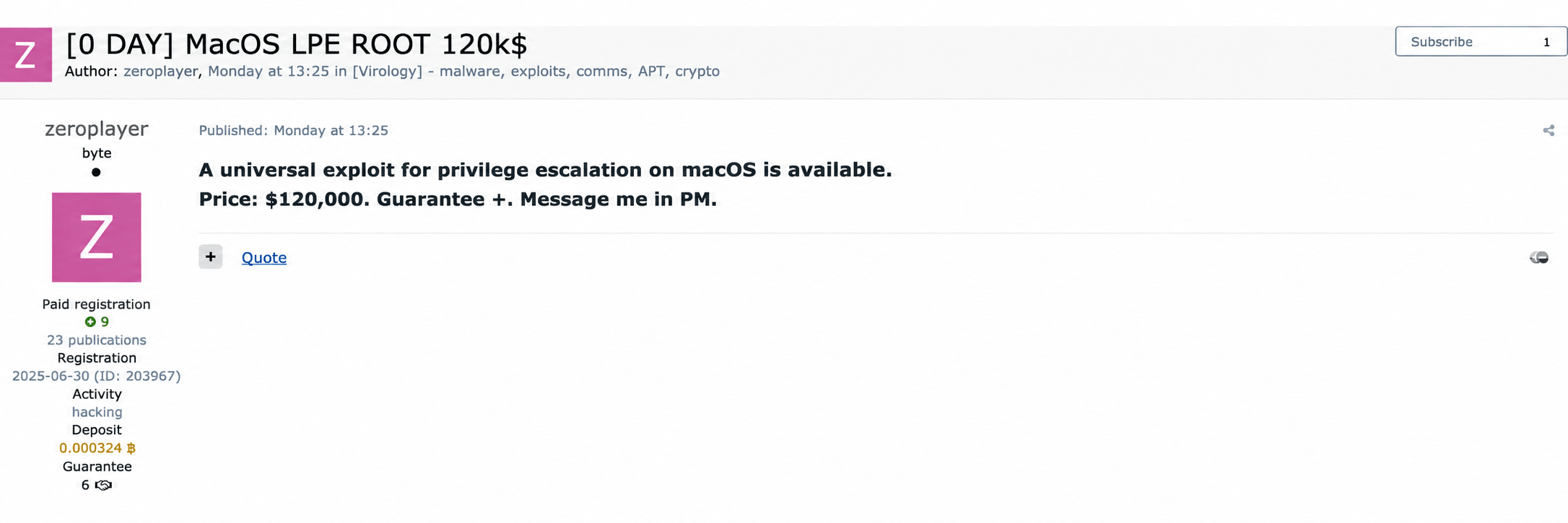
Most LPE ads target Windows, but other platforms are also represented. One listing offered a macOS exploit that its author described as universal, claiming it could provide root access.
Information disclosure and other vulnerabilities
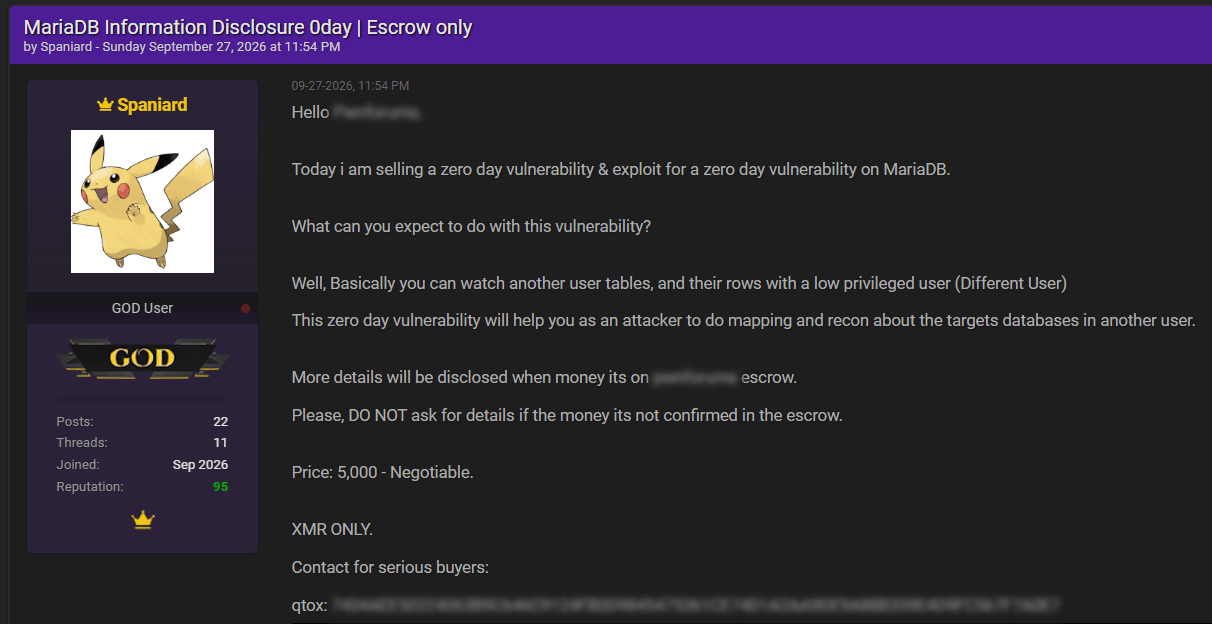
Information disclosure ranked third (10%). These vulnerabilities expose data that should otherwise remain inaccessible, such as database records, website configuration details, or credentials.
One ad offered an exploit for a vulnerability in the MariaDB DBMS
Three other categories each accounted for 7% of offers: authentication bypass and session hijacking, security solution bypass and weakening, and phishing.
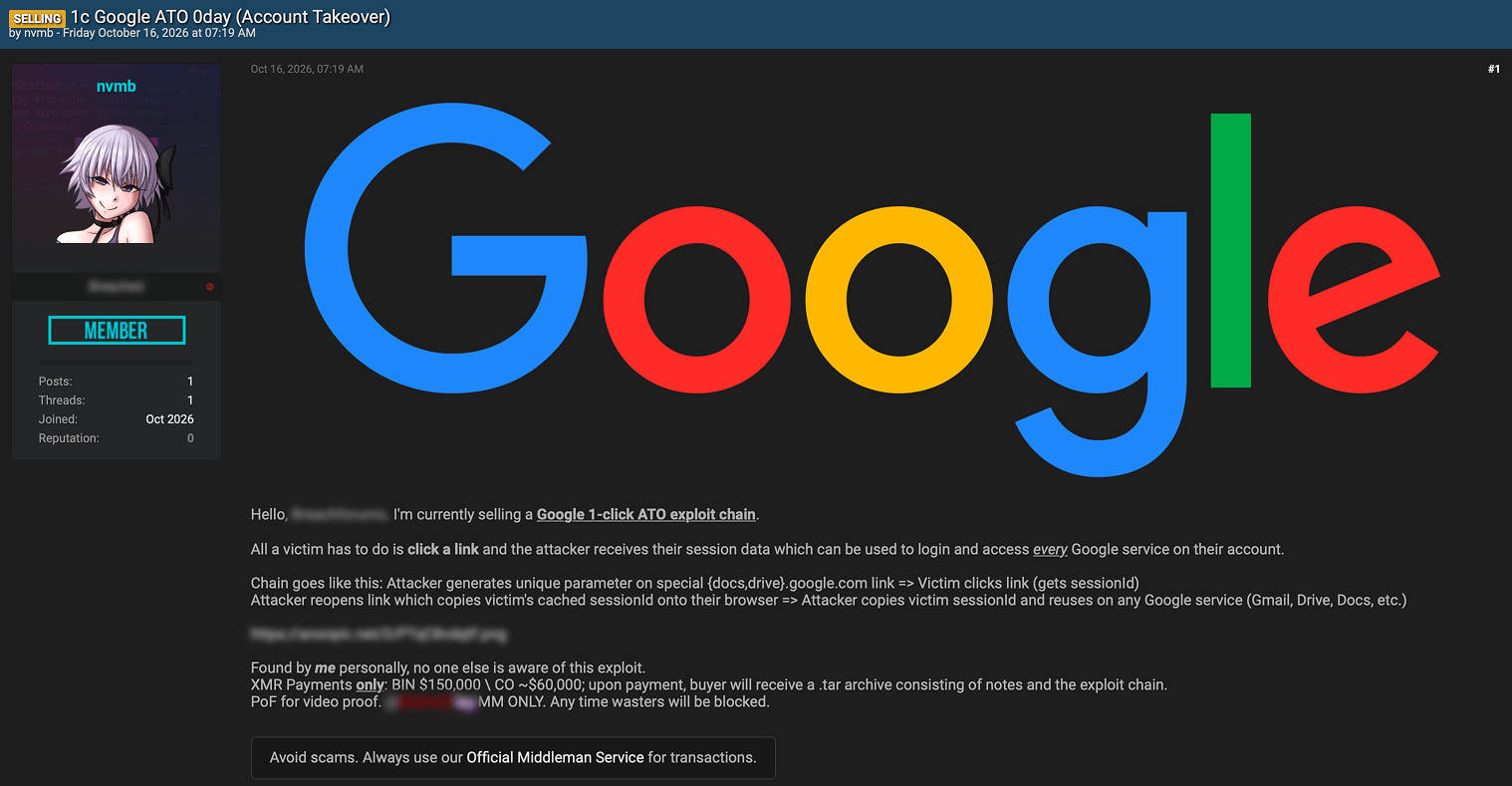
A notable example of authentication bypass is the ad below, which offers an exploit chain for taking over Google accounts. According to the seller, the user only needs to click a link hosted on a legitimate Google domain. The threat actor can then take control of the user’s session and gain access to the services associated with the account.
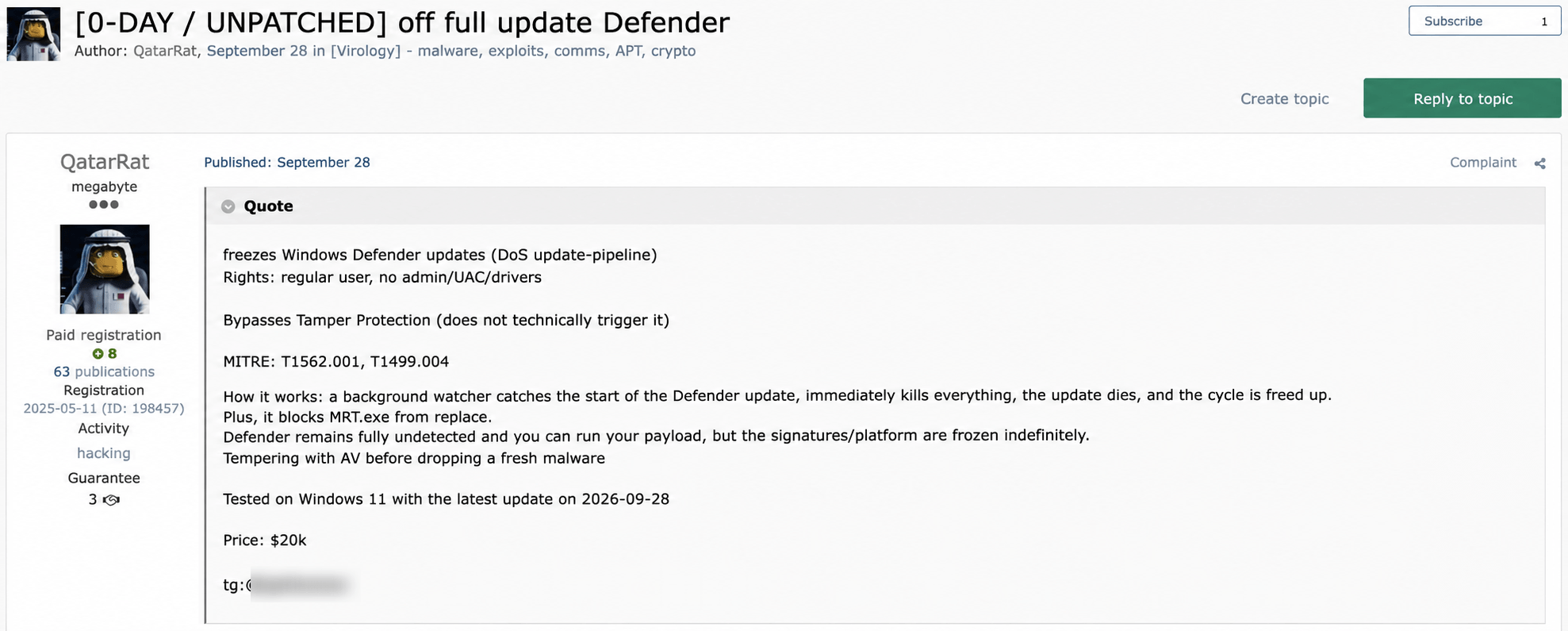
Among the listings involving security solution bypass, one offered a tool to block Microsoft Defender updates. According to the seller, the malware exploits an unpatched vulnerability in the antivirus product’s update mechanism. Microsoft Defender remains enabled and appears to function normally, while its signatures and components remain at the versions installed when the malware ran.
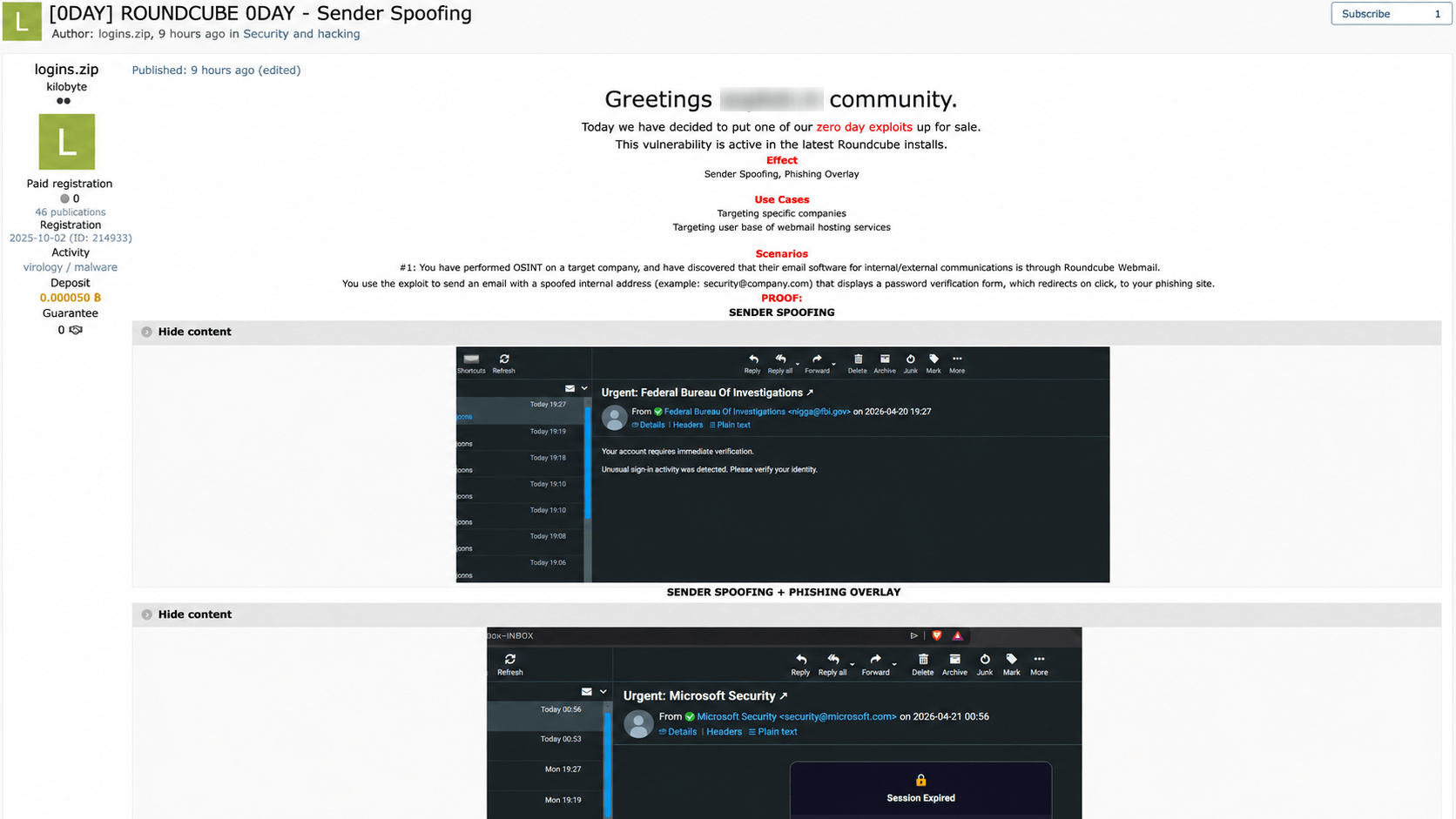
Another listing described a phishing scenario involving an exploit for the Roundcube web‑based email client. The exploit allows adversaries to spoof a sender address and embed a credential‑harvesting form into a message. Because the attack takes place within the trusted client interface, it may be harder for users to recognize than conventional phishing.
SQL injection and denial of service each accounted for 3% of listings, while unauthenticated file uploads accounted for another 2%. These included vulnerabilities in a myBB forum software plug‑in, the Windows Remote Desktop services (RDP), and a WordPress plug‑in that allows files to be uploaded to a public website directory without authentication.
In 34% of ads, sellers claimed that their exploits worked without authentication: in other words, threat actors did not need credentials to access the target service. Affected internet‑facing systems could potentially be attacked by anyone who has their address.
Underground ads vs. publicly disclosed vulnerabilities
Comparing zero‑day listings with subsequently disclosed vulnerabilities based on the affected product and vulnerability class shows that most of the exploits offered for sale remained without a publicly disclosed counterpart for a considerable time. We were able to find potential matches for 70% of the ads. Of these, 77% had no publicly disclosed vulnerability match as of November 2026. Nearly half of the ads had been posted in the first half of the year, meaning that more than four months had passed without a corresponding public disclosure.
For the remaining 23%, we found vulnerabilities that partially matched the listings in terms of product and vulnerability class and were disclosed between two days and four months after the respective posts appeared. However, it is impossible to determine conclusively whether they are the same vulnerabilities.
Sellers of zero‑day exploits do not always disclose technical details, and patches are often released in batches. A single fix may address several vulnerabilities of the same class in the same component. Matching an ad to a vulnerability based on the product, class, and date alone is therefore insufficient to establish that they are one and the same. As a result, mitigation measures that do not rely on software updates may remain the only available line of defense for months.
At the same time, public disclosure and patch release do not mean that the threat is gone. For example, one ad appeared on the very day a patch was released. An exploit for another vulnerability (which had already been exploited before a patch became available) appeared in a listing about two weeks after the release. The seller also claimed that the exploit supported OS builds not included in the vendor’s official list of affected versions.
Underground forums feature purchase requests too: in one such case, adversaries sought exploits for perimeter VPN solutions, including those targeting already known vulnerabilities. Until a patch is installed, a known vulnerability can remain a viable attack vector, making timely updates a key security measure.
Benefits of tracking zero days
Zero‑day vulnerabilities typically have neither a patch nor a public description when exploits for them are offered for sale. Underground ads can reveal the existence of such vulnerabilities before they are identified in attacks or disclosed by software vendors. In 25% of the recorded listings, sellers claimed that their exploits worked on the current product version.
These ads may be available for only a limited time. One offer was marked as closed within 24 hours of being posted, while another transaction was completed in less than six hours. Once an exploit is purchased, the ad typically becomes unavailable, so regular monitoring is essential to capture it.
Sales posts can also provide clues about how an exploit might be used. Some include a vulnerability scanner or a ready‑made list of vulnerable websites alongside the exploit. This suggests that the exploit could subsequently be used in large‑scale campaigns against internet‑facing environments. Some sellers also specify the number of vulnerable devices, ranging from several thousand to more than one million.
An ad can provide valuable intelligence even when the product name is unknown. In some cases, sellers do not disclose the target solution until a deal is made, but they do specify the software category and vulnerability type. This information can help organizations check whether they use systems in that category and take proactive measures accordingly.
Leveraging findings
Monitoring underground resources for zero‑day exploits helps organizations assess a threat’s relevance to their infrastructure and prioritize protective measures before a patch becomes available.
The process involves several key steps:
1. Matching intelligence against your infrastructure
First, check whether your organization uses any products or systems in the affected category. This may require an inventory: approximately 63% of the offers concern applications, plug‑ins, drivers, and devices. The inventory should also cover dedicated software: of the 19 identified vendors, 14 appeared only once in the recorded listings. If the seller does not disclose the product name, you can still assess the listing’s relevance to your infrastructure based on the software category and the conditions required for exploitation.
2. Prioritizing threats
Not all zero days pose the same level of risk to a particular organization.
Their priority depends on the seller‑defined conditions, including whether:
- the target system is internet‑facing (44% of ads)
- authentication is required (34% of offers describe exploitation without authentication)
- prior access to the system is mandatory (34%)
- user interaction is needed (17%)
Internet‑facing systems that can be compromised without credentials should be given priority.
3. Taking proactive pre‑patch measures
Before a vulnerability is addressed, you can mitigate the associated risk by:
- restricting internet access to the vulnerable service by placing it behind a VPN or allowing connections only from approved IP addresses
- disabling the exposed feature or component
- breaking the exploitation chain—e.g., if an exploit targeting a CMS requires a separate SQL injection vulnerability, addressing that prerequisite could prevent the chain from succeeding
4. Detecting exploitation
Ads generally do not provide enough information to identify the exploit itself. Detection therefore relies on signs of successful exploitation, while monitoring data helps determine what to look for and where to look first.
Focus on the following areas:
- Priority. Start by checking systems in the category mentioned in the ad.
- Perimeter devices and storage systems. Monitor outbound connections, including those to the internal network, configuration changes, and newly created accounts.
- LPE. Look out for running processes gaining system‑level privileges.
- Security evasion. Check whether antivirus databases are up to date, look for update failures, and monitor the status of security solutions.
- Session hijacking. Look for the same session being used from different devices or IP addresses.
- Retrospective hunting. Once a vulnerability is publicly disclosed, review available historical logs, prioritizing the period between the ad’s publication and patch installation.
5. Tracking patches
When an exploit ad is identified for a product or software category used by your organization, monitor for patch releases and prioritize their installation.
6. Long‑term planning
Monitoring zero‑day exploit offers helps identify the types of systems that attract threat actors’ attention. In the underground ads identified by our team, these included remote access tools, perimeter equipment, email clients, content management systems, and Windows workstations. Organizations can leverage these findings to plan security audits and penetration tests and determine which services need to be accessible from the Internet.